
Have you ever wanted to express thoughts, emotions, or the fascinating world of the human mind with just one symbol? A psychology emoji can make conversations about thinking, feelings, behavior, and mental well-being easier to understand and more engaging.
Whether you’re a psychology student, sharing an educational post, discussing emotions with friends, or creating mental health content, the right emoji can add meaning to your message. But which emojis represent psychology, and what do they actually communicate?
In this guide, you’ll discover popular psychology-related emojis, their meanings, and simple copy-and-paste options for everyday use. From the 🧠 brain emoji to symbols representing emotions, self-awareness, and support, we’ll explore useful choices for WhatsApp, Instagram, and TikTok. You’ll also find practical emoji combinations and examples to help express psychological concepts naturally. By the end, you’ll know which symbols best match your thoughts, educational content, and conversations about the human mind.
What do psychology emojis mean?
Psychology emojis are symbols people use when discussing the mind, thoughts, behavior, emotions, therapy, and personal development. There is no single official psychology emoji, but several existing symbols are commonly used to represent these topics.
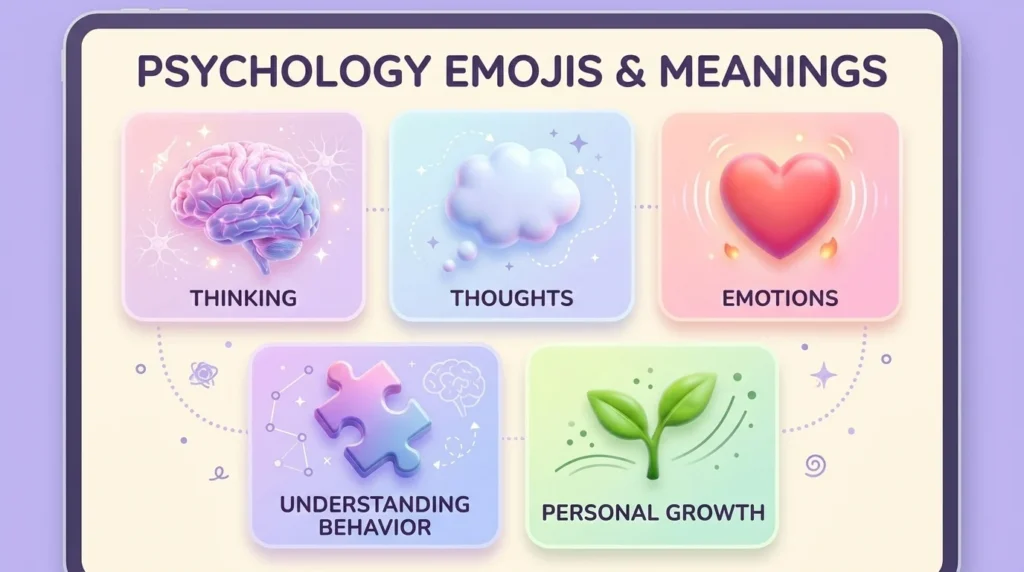
The brain is one of the most recognizable choices for psychology-related content. Other symbols can help express reflection, emotional support, communication, and self-care. Their meaning can change depending on the caption or conversation around them.
| Emoji | Core meaning | Misread as | Best used when |
|---|---|---|---|
| 🧠 | Mind, thinking, psychology | Intelligence only | Psychology posts and study notes |
| 🧑⚕️ | Professional healthcare support | General doctor | Therapist or professional-related content |
| 💭 | Thoughts and reflection | Daydreaming only | Sharing personal thoughts |
| 🫂 | Comfort and emotional support | A simple greeting | Supportive messages |
| 🧩 | Understanding behavior and patterns | A puzzle or game | Discussing personality and self-discovery |
| 🌱 | Growth and development | Gardening | Personal growth and healing journeys |
Psychology emoji copy and paste
Here are 10 useful symbols for psychology-related conversations, study content, and social media. You can copy them directly into your messages or captions.
🧠 Brain
Meaning: Thinking, learning, memory, and the human mind.
Example 1: Learning something new every day 🧠
Example 2: The human mind is fascinating 🧠
🧑⚕️ Health Professional
Meaning: Professional care, mental health support, and healthcare conversations.
Example 1: Appreciating the people who support mental well-being 🧑⚕️
Example 2: A conversation with a professional can help 🧑⚕️
💭 Thought Balloon
Meaning: Private thoughts, reflection, and ideas that are still forming.
Example 1: Thinking about life and its lessons 💭
Example 2: Some thoughts need time 💭
🫂 People Hugging
Meaning: A visual expression of comfort, connection, and support.
Example 1: Sending you a little support today 🫂
Example 2: You don’t have to face everything alone 🫂
🧩 Puzzle Piece
Meaning: Exploring patterns, connections, and different parts of an experience.
Example 1: Every experience teaches us something 🧩
Example 2: Understanding yourself takes time 🧩
🌱 Seedling
Meaning: Personal development, fresh starts, and gradual progress.
Example 1: Growing at my own pace 🌱
Example 2: Small steps still count 🌱
🗣️ Speaking Head
Meaning: Conversation, expressing opinions, and sharing experiences.
Example 1: Honest conversations matter 🗣️
Example 2: Speak openly and listen carefully 🗣️
❤️ Red Heart
Meaning: Care, affection, and emotional connection.
Example 1: Be kind to yourself ❤️
Example 2: A little kindness makes a difference ❤️
🧘 Person in Lotus Position
Meaning: Mindfulness, meditation, and moments of calm.
Example 1: Taking a quiet moment for myself 🧘
Example 2: Making space for peace and reflection 🧘
🪞 Mirror
Meaning: Self-reflection, looking inward, and thinking about personal experiences.
Example 1: Learning more about who I am 🪞
Example 2: Self-reflection can bring new perspectives 🪞
How to use psychology emojis the right way
The best symbol depends on your message and the people who will read it. A study-related post may need a different style from a personal message to a friend.
WhatsApp: Psychology emoji WhatsApp messages can make conversations about feelings, studies, or personal experiences more expressive. Use a symbol naturally rather than adding several to every sentence.
Instagram: For a psychology emoji bio, choose one or two symbols that match your profile. Students might use a brain symbol, while a personal-growth page might prefer a seedling. Keep captions readable and avoid making serious topics look like jokes.
TikTok: Creators can use these symbols in video captions, psychology facts, study clips, and relatable discussions. A little humor can make educational content approachable, but sensitive subjects deserve respectful language.
Do:
- Match the symbol to the message.
- Keep supportive conversations warm and thoughtful.
- Use clear words when discussing serious mental health topics.
- Check that your audience understands the context.
Don’t:
- Use an emoji to diagnose someone’s behavior.
- Assume a symbol reveals someone’s personality.
- Make fun of mental health struggles.
- Use too many symbols in one short caption.
Best psychology emoji combos — copy & paste
A psychology emoji combo can make a caption or message feel more personal. Here are 15 combinations using the same psychology-related symbols.
Reflective
- 🧠💭 — For a thoughtful psychology or learning post.
- 🪞🧠 — For a caption about understanding yourself.
- 💭🧩 — For exploring thoughts and experiences.
Supportive
- 🫂❤️ — Send comfort to someone who needs encouragement.
- ❤️🌱 — Share a message about kindness and growth.
- 🧑⚕️🫂 — Use in a supportive professional-care context.
Mindful
- 🧘💭 — For meditation and quiet reflection.
- 🌱🧘 — For a personal development update.
- 🧠🧘 — For a post about balancing learning and calm.
Personal growth
- 🧩🌱 — For progress and self-discovery.
- 🪞🌱 — For a fresh start or personal reflection.
- 🧠🧩 — For psychology lessons and interesting ideas.
Encouraging
- 🗣️🫂 — For conversations that offer support.
- ❤️🧠 — For a post connecting emotions and thoughts.
- 💭🌱 — For sharing a positive new perspective.
Trending psychology emojis in 2027
As people create more educational, personal, and wellness-focused content, psychology-related symbols offer a simple way to make posts easier to recognize and engage with. Rather than treating any symbol as a verified popularity ranking, these are practical ways the symbols may appear in content moving into 2027.
| Emoji | Why trending | Who uses it | Platform |
|---|---|---|---|
| 🧠 | Fits bite-sized learning and mind-related discussions | Students and educators | Instagram, TikTok |
| 💭 | Works well with reflective captions and relatable thoughts | Everyday users and creators | WhatsApp, Instagram |
| 🫂 | Fits supportive and encouraging messages | Friends and wellness creators | WhatsApp, TikTok |
| 🌱 | Connects naturally with growth-focused content | Personal development creators | Instagram, TikTok |
Psychology students, content creators, and people sharing personal experiences can use these symbols in different ways. Their popularity and interpretation depend on the topic, audience, and platform.
As digital communication evolves, emoji use continues to adapt to new conversations and changing ways of expressing emotions.
Frequently Asked Questions
1. What is the most popular psychology emoji?
🧠 is one of the most recognizable choices for psychology-related content because it connects directly with the mind, thinking, and learning. However, there is no official single psychology emoji.
2. What does 🧠 mean from a girl or boy?
It can suggest intelligence, deep thinking, studying, or an interest in psychology. The intended meaning depends on the conversation, so context matters more than gender.
3. Why do emojis look different on iPhone vs Android?
Apple and Android use different emoji designs and artwork. The general meaning usually stays similar, but small visual differences can change how a symbol feels.
4. Are psychology emojis used differently in other countries?
Yes. People may use the same symbol in different cultural or conversational contexts. A symbol that feels supportive to one audience may be understood differently by another.
5. How can I use psychology emoji copy paste symbols?
Simply select and copy a symbol from the list, then paste it into WhatsApp, Instagram, TikTok, or your profile bio. Check how it appears on your device before publishing.
Conclusion
Psychology emojis offer a simple and creative way to represent the human mind, thoughts, emotions, and behavior in digital communication. Symbols like 🧠, 💭, ❤️, 🧩, and 🌱 can help express ideas related to thinking, feelings, self-awareness, personal growth, and emotional well-being.
Whether you’re a student, content creator, or simply interested in psychology, these symbols can make your messages and educational posts more engaging. You can use them in WhatsApp conversations, Instagram captions, TikTok videos, and study notes. Remember, emojis support communication but cannot replace professional psychological explanations or advice. Choose symbols that match your intended message.

Evan Brooks writes about emoji meanings, symbols, and digital communication. His goal is to explain how emojis can change the tone and meaning of messages in clear, practical language.