
The crossing arms emoji 🙅♀️ is a fun and expressive way to say “no,” show disagreement, or make a playful reaction in a conversation. Instead of typing a long reply, you can simply use this emoji to make your feelings clear.
But its tone can change depending on the words, situation, and person you are talking to. In a friendly chat, 🙅♀️ may sound cute or humorous, while in a serious conversation, it can show a firm refusal or boundary. You may see this emoji frequently in WhatsApp messages, Instagram comments, TikTok captions, and casual social media conversations.
It can also be paired with a few related emojis to create funny, cute, or expressive messages. If you have ever wondered what the crossing arms emoji really means and when you should use it, this guide will help you understand its meaning, context, combinations, and everyday uses.
What do crossing arms emoji mean?
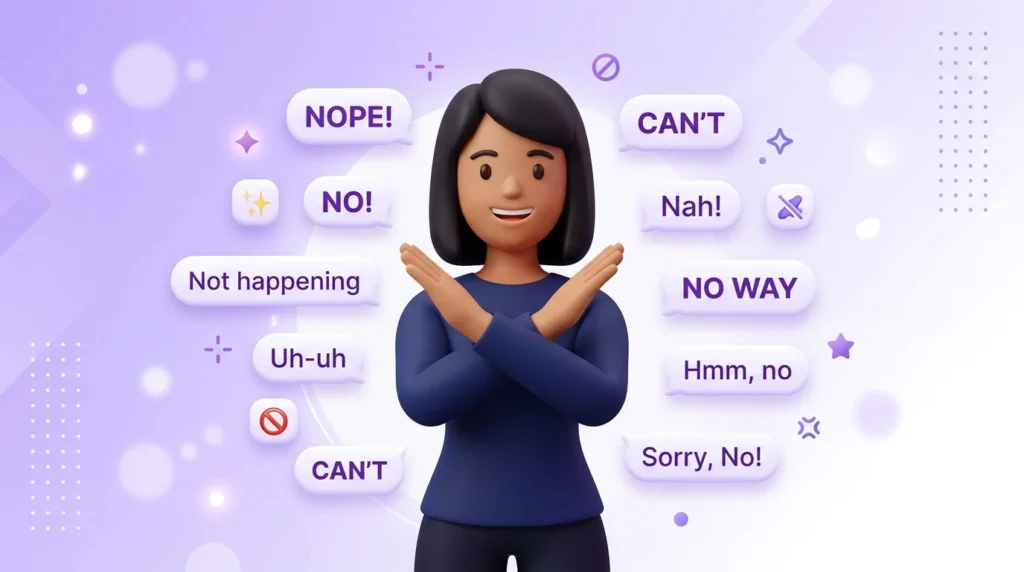
The most direct choice is 🙅♀️, often used to show refusal, disagreement, rejection, or a clear “no.” In a playful chat, it can also soften a refusal or make it feel humorous rather than harsh.
Its closest variations include 🙅♂️ and 🙅, which communicate the same basic gesture while allowing different presentation choices. Context matters: “Nope 🙅♀️” can sound playful, while “Absolutely not 🙅♀️” can feel much firmer.
Other nearby gesture emojis can support the same conversational mood without changing the topic. 🙆♀️ or 🙆 can suggest approval or openness, while 🤝 can fit agreement or cooperation after a disagreement.
| Emoji | Core meaning | Misread as | Best used when |
|---|---|---|---|
| 🙅♀️ | Refusal or “no” | Anger | Setting a clear boundary |
| 🙅♂️ | Refusal or disagreement | Serious rejection | Casual or direct replies |
| 🙅 | A general “no” | Coldness | Neutral conversations |
| 🙆♀️ | Approval or openness | Indecision | Showing acceptance |
| 🙆♂️ | Approval or openness | Uncertainty | Agreeing with someone |
| 🙆 | General approval | Confusion | Neutral positive replies |
❤️ Red Heart
Meaning: Deep love, affection, and emotional connection.
Example 1: I miss you ❤️
Example 2: You are my everything ❤️
🙅♀️ Woman Gesturing No
Meaning: Refusal, disagreement, or a clear “no.”
Example 1: Not today 🙅♀️
Example 2: I’m saying no 🙅♀️
🙅♂️ Man Gesturing No
Meaning: Refusal or disagreement expressed through a crossed-arm gesture.
Example 1: Nope 🙅♂️
Example 2: That’s not happening 🙅♂️
🙅 Person Gesturing No
Meaning: A general refusal, rejection, or disagreement.
Example 1: No way 🙅
Example 2: Count me out 🙅
🙆♀️ Woman Gesturing OK
Meaning: Approval, acceptance, or a positive response.
Example 1: That works for me 🙆♀️
Example 2: Sounds good 🙆♀️
🙆♂️ Man Gesturing OK
Meaning: Agreement, acceptance, or approval.
Example 1: I’m okay with that 🙆♂️
Example 2: Deal 🙆♂️
🙆 Person Gesturing OK
Meaning: A general gesture of approval or acceptance.
Example 1: All good 🙆
Example 2: Yes, that works 🙆
💪 Flexed Biceps
Meaning: Strength, confidence, effort, or encouragement.
Example 1: You’ve got this 💪
Example 2: Strong work today 💪
🤝 Handshake
Meaning: Agreement, cooperation, partnership, or mutual understanding.
Example 1: We have a deal 🤝
Example 2: Let’s work together 🤝
🫶 Heart Hands
Meaning: Affection, appreciation, warmth, or heartfelt support.
Example 1: Sending love 🫶
Example 2: Thanks for being there 🫶
How to use crossing arms emoji the right way
On WhatsApp, crossing arms emoji work naturally in personal conversations. Use 🙅♀️ after a teasing request, a firm boundary, or a playful refusal. The same gesture can feel softer when the surrounding words are friendly.
On Instagram, the gesture can work well in captions, comments, Stories, and creator posts. It can emphasize a bold opinion, a relatable moment, or a humorous “not today” reaction without taking over the whole caption.
On TikTok, the tone is often more playful. Creators and viewers can use 🙅♀️ to react to jokes, trends, awkward situations, or deliberately dramatic moments.
Do use one or two relevant emojis when the message is clear. Don’t add gestures to every sentence, and avoid using 🙅♀️ in a serious conversation if the other person might read it as dismissive.
Emojis can also look different across devices because Apple, Google, Samsung, and other platforms create their own artwork for the same Unicode emoji. The basic encoded character stays the same, but facial details, colors, posture, and styling can vary.
Best crossing arms emoji combos — copy & paste
Romantic
- 🙅♀️❤️ — Playfully saying no while keeping the message affectionate.
- 🫶❤️ — Sending warmth and love in a relationship.
- 🤝❤️ — Showing agreement and affection together.
Cute
- 🙅♀️🫶 — A playful refusal with a warm tone.
- 🙆♀️🫶 — Showing cheerful acceptance.
- 💪🫶 — Encouraging someone with affection.
Flirty
- 🙅♀️🫶 — “I’m pretending to say no.”
- 🙆♀️❤️ — A sweet, approving response.
- 🙅♂️❤️ — A playful, dramatic reaction.
Missing someone
- ❤️🫶 — A simple affectionate message.
- 🙅♀️❤️ — Saying you do not want to be apart.
- 🤝🫶 — Showing emotional closeness and support.
Good night
- 🙅♀️❤️ — Playfully refusing to end the conversation.
- 🫶❤️ — A warm bedtime message.
- 🙆♀️🫶 — A soft, positive sign-off.
Trending crossing arms emoji
In 2026, gesture-based emojis continue to fit short-form communication because they can add emotion without making a message longer. 🙅♀️ is useful for playful boundaries, while 🙅♂️ and 🙅 work well when users want a direct reaction without extra words.
Content creators can pair 🙆♀️ with positive replies, especially in comments or casual posts. 💪 is also easy to recognize in motivational content, while 🫶 frequently suits supportive and affectionate conversations.
| Emoji | Why trending | Who uses it | Platform |
|---|---|---|---|
| 🙅♀️ | Quick, expressive refusal | Casual chatters, creators | WhatsApp, Instagram, TikTok |
| 🙅♂️ | Clear reaction without words | Everyday social users | WhatsApp, TikTok |
| 🙆♀️ | Positive reaction and approval | Creators, commenters | Instagram, TikTok |
| 💪 | Short encouragement and confidence | Creators, friends | Instagram, TikTok |
As digital conversations evolve, emoji use generally keeps adapting to new humor, social habits, and visual styles.
FAQ
1. What is the most popular crossing arms emoji?
🙅♀️ is a common choice when someone wants to express “no,” refusal, or playful disagreement. The gender-neutral 🙅 also works when a neutral presentation is preferred.
2. What does 🙅♀️ mean from a girl or boy?
The emoji itself does not reveal what the sender personally feels. From either a girl or boy, it can communicate refusal, disagreement, or a playful boundary depending on the message around it.
3. Why do emojis look different on iPhone vs Android?
Different platforms design their own visual versions of Unicode emojis. That means the same emoji can have slightly different shapes, expressions, or styling while keeping its basic meaning.
4. Are crossing arms emoji used differently in other countries?
The basic gesture is broadly understandable, but humor, politeness, and conversational habits can vary by culture. Always consider the surrounding words and relationship before interpreting the tone.
Conclusion
The crossing arms emoji is a handy way to make refusal, boundaries, and reactions feel more expressive. Choose the version that fits your conversation, and let the surrounding words guide the tone.
With the right context, a simple gesture can make digital communication feel much more natural.

Mia Carter is a digital culture writer who explores the meaning, emotions, and everyday use of emojis. She enjoys turning confusing emoji symbols into simple, easy-to-understand explanations.